
How One Solo Host Stopped Losing Guests to Slow Replies
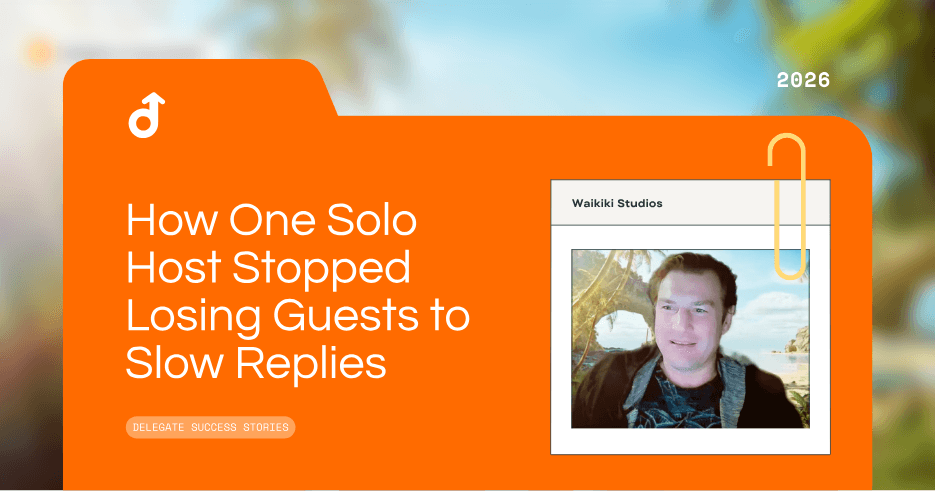
Running a short-term rental business alone means every guest message competes with everything else on your plate. For Nikodem Prior, owner of Waikiki Studios, that competition was quietly costing the business its most important asset: guest satisfaction. The Challenge Every unanswered message was a satisfaction problem As a solo operator, Niko was handling every side of the business alone, from reservations to guest questions to the daily logistics of keeping properties running. The volume was manageable in theory. In practice, something always slipped. “I always realized that by not having enough time to address every single question and respond to all guest communications in a timely manner, and with the thorough, complete approach, it was impacting their overall satisfaction,” Niko explained. That’s the quiet math of solo hosting: guests judge an entire stay on how quickly and completely their questions get answered. In fact, the first 24 hours after a guest reaches out often decides whether that stay ends in a five-star review or a complaint, and a solo founder juggling reservations, admin, and communication simply can’t be available for all of it, all the time. The Root Cause Solo capacity has a ceiling, no matter how good the operator is Niko wasn’t struggling because of a lack of skill or effort. The problem was structural. Doing everything yourself in a short-term rental business means every hour spent on guest communication is an hour not spent managing the business more broadly, and every hour spent on operations is an hour guests are left waiting. It’s a pattern familiar to almost every solo entrepreneur: the busier the business gets, the less available its owner becomes for the parts of it that need a human touch most, like a guest asking a last-minute question before check-in. Niko had considered getting outside help before, like many solo operators, but kept putting it off. “I’ve been always interested in getting any help I can get in a solo business, but the concept of getting a virtual assistant… seeming like this would be a really good fit for the type of industry, I was slowly starting to research it.” The shift happened when the right outreach landed at exactly the moment of readiness, turning years of considering it into an actual first step. The Turning Point A dedicated assistant, embedded into daily operations Waikiki Studios partnered with Delegate.co to bring on a dedicated virtual assistant focused specifically on the two areas that had been slipping the most: reservations and guest communication. The assistant became a consistent presence in the day-to-day operation, processing reservations on the administrative side and maintaining active, thorough communication with guests throughout their stay. “The one that was definitely possible to be solved, and it has been very successfully, was the customer service,” Niko said. “Having someone able to focus consistently, not just processing the reservations from the administrative side but also maintaining a proper communication with the guests.” That consistency is easy to underestimate and hard to replicate solo. A dedicated assistant isn’t context-switching between ten different responsibilities the way a solo founder has to. Guest communication is the job, not a task squeezed in between everything else. The Outcome More availability, more confidence, and a partnership worth recommending The impact went beyond guest response times. With reservations and communication handled reliably, Niko regained something solo operators rarely get back once it’s gone: personal availability and the confidence that things were running well even when attention was elsewhere. “The relationship I established with Delegate has impacted positively every area, not just this business, but my availability and confidence that things are handled in all the other enterprises I’m trying to keep tabs on,” Niko said. That confidence has extended into how Niko now talks about the model with other entrepreneurs. Solo founders tend to compare notes on the same struggle: how to raise daily efficiency without losing work-life balance entirely. “I’ve already recommended Delegate to quite a few of my friends, colleagues, and even random people I’ve chatted up about work. Especially with other solo entrepreneurs, there’s always that same conversation: how to raise the efficiency of your daily work and not lose the work-life balance.” “This worked for me, and I see no reason why it wouldn’t be equally beneficial for others, not just in this industry. I think the sky is the limit.” What This Looks Like for Your Business Niko’s story is a familiar one across short-term rental operations: guest service quality drops the moment daily admin outpaces one person’s bandwidth. If that sounds familiar, it’s worth seeing what the best virtual assistant services for solo founders actually look like in practice. It’s exactly the gap Delegate.co is built to close, matching founders directly with vetted virtual talent who take over daily operations, so guest communication stays consistent even as the business grows. Top 1% Global Talent. Every assistant is rigorously vetted and screened before matching, so they’re prepared to execute your workflows from day one. Substantial Cost Savings. Clients typically reduce labor costs by up to 65% compared to local recruitment. Zero Admin Headaches. Delegate.co manages international compliance, HR legalities, payroll, and benefits, simplified into one flat monthly invoice. Real-Time Integration. Assistants commit to working during your exact business hours, acting as a true extension of your team. Book a discovery call to see what dedicated support could look like for your business. Explore More Resources Schedule A Call
The 24-Hour Window That Decides Whether You Get a Bad Review

A single bad review during peak season doesn’t just cost you one guest’s opinion. It sits on your listing for the next several months of bookings. The good news: most of those reviews were preventable, and the prevention window is shorter than most operators realize. Summer occupancy drives revenue, but it also compresses everything that can go wrong. Faster turnovers, busier cleaners, stretched maintenance teams, higher guest expectations. Under that pressure, one unresolved issue can turn into a public review that shapes your Q4 booking volume before Q4 even starts. Here’s what most operators miss: guests rarely report a problem the moment it happens. They notice it, get mildly frustrated, decide it’s not worth a text message, and then mention it in the review three days after checkout. By then, it’s no longer feedback you can act on. It’s a permanent mark on your listing. The fix isn’t better review responses. It’s catching the friction before the guest ever reaches for the review button. What One Bad Review Actually Costs Most operators understand reviews matter. What gets underestimated is how much a single recurring complaint theme can do to visibility, even on a property that maintains a strong overall rating. Platforms increasingly factor guest satisfaction signals embedded in review language into how listings rank, not just the star average. A cleanliness complaint chips away at trust. A communication complaint affects booking confidence for travelers comparing similar listings. A maintenance complaint plants doubt about the overall experience, even for guests who never personally encountered the issue. None of this requires a one-star review to do damage. A pattern of small, specific complaints across otherwise positive reviews is often enough to start quietly suppressing visibility. That’s the actual math behind prevention being worth more than damage control: one review shapes perception for every future guest who reads it, for as long as it stays visible. Why Responding to Bad Reviews Doesn’t Fix the Problem The standard playbook looks like this: a guest leaves a negative review, the operator responds publicly, an explanation gets offered, sometimes compensation, sometimes a dispute filed with the platform. All of that happens after the review is already live, already readable by every future guest comparing listings, already part of how the algorithm reads the property. Defensive review management is closer to mitigating water damage after a leak than preventing one. It’s necessary, but it doesn’t undo what already happened. The actual leverage point is earlier: during the stay, not after checkout. The Hidden Friction Problem Most guests don’t report issues in real time. They notice something off, weigh whether it’s worth mentioning, and usually decide it isn’t, until the review prompt arrives and gives them a reason to bring it up. That creates a blind spot: the operator assumes everything went smoothly because no one complained, while the guest already formed a negative impression days earlier. The issues are rarely dramatic. Weak air conditioning. A smart lock that behaved inconsistently. A coffee machine that stopped working. Wi-Fi that struggled during a video call. Check-in instructions that were technically correct but confusing in practice. None of these are catastrophic on their own. Left unaddressed, they’re exactly the kind of specific, quotable detail that shows up in a review. The Fix: A Proactive Mid-Stay Check-In Instead of waiting for guests to volunteer a problem, the operation actively checks for one. This works best within the first 12 to 24 hours of arrival, when first impressions are forming and most operational issues have already become visible to the guest, even if they haven’t said anything yet. A dedicated assistant reaches out with specific, targeted questions rather than a generic “how’s everything going?” Are the check-in instructions working smoothly? Is the Wi-Fi handling what you need it to? Is everything clean and functioning the way you’d expect? Have you run into any issues with appliances or amenities? This does two things at once. It surfaces problems while there’s still time to fix them, and it signals attentiveness that guests notice and respond well to, even when something did go wrong. Why the First Day Matters Most The first day of a stay sets the tone for everything after it. It’s also when most operational issues first become visible, a cleaning gap, a malfunctioning appliance, confusing access instructions. Caught and resolved within hours, these become a minor footnote. Left unaddressed for two or three days, they become the headline of the eventual review. Speed is the entire mechanism here. Proactive outreach buys the operator time to intervene before frustration calcifies into something the guest feels compelled to write down. How a Resolved Problem Becomes a Better Review Than No Problem at All No property is flawless, and no operation avoids every issue. What actually separates strong portfolios from average ones isn’t the absence of problems. It’s the speed of resolution. A guest whose AC issue gets fixed within two hours of mentioning it often leaves more impressed than a guest whose stay had zero hiccups, because responsiveness itself builds trust in a way a perfectly uneventful stay doesn’t. The problem becomes part of a positive service story instead of a complaint. That reframe is where a dedicated assistant creates real, measurable value. Making Resolution Actually Fast Catching the issue is only half the system. The other half is a dedicated assistant who has clear authority and a predefined workflow for acting on it immediately, not escalating it up a chain that delays the fix. A maintenance issue triggers an immediate call to an approved local vendor. A cleaning concern gets corrective action coordinated the same day. A guest stuck on access instructions gets real-time support instead of a delayed callback. Every hour a problem sits unresolved increases the odds it becomes a permanent part of the guest’s account of the stay. Building This Into a Standing System The portfolios that hold strong ratings through peak season aren’t running on luck. They’ve built a repeatable system: scheduled mid-stay check-ins, standardized outreach templates,
7 Virtual Marketing Services for Property Managers

Property management has become competitive. A decade ago, many companies grew primarily through referrals and local networking. While referrals remain valuable, they are no longer enough to sustain growth in a crowded market. Owners research management companies online, and investors compare service providers before making contact. Property managers now compete for visibility across search engines, social platforms, and review sites. The challenge is that most small property management companies lack a dedicated marketing department. Marketing responsibilities fall on founders or operations managers who are already stretched thin. As a result, marketing becomes inconsistent, leads go unfollowed, and opportunities slip away. This is where virtual marketing support services provide value. Instead of hiring a full in-house team, property managers can leverage dedicated professionals for targeted support. Why Virtual Marketing Support Matters Marketing success comes from consistency. The challenge for most property managers is not knowing what to do; it is finding the time to execute. Most companies are busy handling owner communication, maintenance, and operational demands. Virtual marketing support creates dedicated capacity for growth-focused activities. 1. Social Media Management Many companies create accounts but struggle to maintain presence. A virtual specialist can manage content calendars, schedule posts, and monitor performance. Social Media Management showcases properties and highlights local market expertise, building trust long before a prospect is ready to sign. 2. Content Marketing and Blog Management Property owners search for topics like “Should I self-manage my rental?” or “How to increase rental income.” A virtual content specialist can assist with blog creation, SEO, and website updates. This content establishes authority and builds organic visibility over time. 3. Search Engine Optimization (SEO) Without Search Engine Optimization, websites struggle to generate traffic. SEO specialists focus on local visibility, ensuring your business appears when owners search for management companies in your city. 4. Lead Management and CRM Support Generating leads is half the battle; following up is what converts them. A virtual coordinator can maintain CRM systems, track activity, and ensure inquiries never sit unanswered. 5. Email Marketing and Nurture Campaigns Property owners often spend months researching options. Email Marketing allows you to stay visible, educate prospects, and position your company as the preferred choice when they are ready to move forward. 6. Marketing Automation As companies grow, manual processes become difficult to manage. Marketing Automation streamlines lead management and appointment scheduling, allowing you to scale efforts without adding complexity. 7. Online Reputation and Review Management Before contacting a company, owners check Google reviews. Online Reputation management involves proactively monitoring feedback and encouraging testimonials to maintain a credible profile. Virtual Agency vs. Dedicated Specialist Many companies face a choice between a traditional Virtual Marketing Agency and dedicated virtual professionals. Agencies often provide broad services with limited day-to-day involvement. Dedicated virtual specialists integrate into your business, learning your brand and processes. This embedded approach provides greater flexibility and stronger operational alignment. Marketing is no longer optional for property management companies that want to grow consistently. The companies that remain visible and educational gain a significant advantage. Explore Delegate Delegate helps property management companies build scalable marketing and operational support. Our specialists integrate into your workflows and support everything from content marketing to CRM management. Learn more at dev.delegate.co/. Explore More Resources Schedule A Call
Boost Vacation Rentals with Digital Marketing Hacks

“It’s not the budget that matters.”
That idea challenges one of the most common assumptions in marketing. Many vacation rental operators believe that growth requires more ad spend. In reality, the most effective strategies focus on positioning, visibility, and consistency rather than simply increasing budget.
Mastering the Art of Storytelling in Marketing

“You have to be a great communicator and a great listener.”
That principle sits at the core of modern marketing, and it’s a central theme explored in a recent Sip & Scale episode, where storytelling, personal branding, and audience psychology take center stage. While tools and platforms evolve, one thing remains constant: marketing that resonates is marketing that understands people.
Delegate.co Reflects on a Defining 2025 and Sets the Stage for Smarter Growth in 2026

Managed virtual assistant partner closes a year of operational refinement, new client programs, and a founder-focused outsourcing playbook NEW YORK, NY, January 28, 2026. Delegate.co, a managed virtual assistant partner for founders and short-term rental (STR) operators, today reflected on a year spent fixing what most founders get wrong about delegation. After a 2025 marked by operational refinement, productized hiring programs, and new educational resources, the company enters 2026 with a sharper focus: helping founders scale without burnout, chaos, or costly hiring mistakes. Delegate.co’s message for the year is direct. Outsourcing works only when systems, people, and accountability are built together. 2025: A Year of Operational Clarity Rather than chasing growth at all costs, Delegate.co spent 2025 refining a core belief: good delegation starts with hiring the right person, and speed comes second. Throughout the year, the company worked closely with founders and STR operators who already used modern tools and software but were missing one piece: trained people who could run those systems consistently. “What we saw over and over again in 2025 was this gap,” said Blendi Muriqi, Founder and CEO of Delegate.co. “Founders had the tools, the dashboards, the SOPs, but no one truly owned them. The result was frustration, rework, and founders pulling themselves back into day-to-day operations.” In response, Delegate.co doubled down on its managed services approach. Placement became one part of a broader process that includes: Role clarity before hiring Skills-based vetting in place of intuition-led interviews Structured onboarding and SOP alignment Ongoing performance oversight to prevent post-hire drop-off The approach resonated with STR operators handling peak seasons, guest communication, and back-office complexity, especially in Q3 and Q4, when operational pressure is highest. Programs That Shaped 2025 The most impactful initiative of the year was the Q4 Success Pack, launched for the holiday season to help founders avoid year-end burnout. The program bundled: Free onboarding for new clients A complimentary SOP audit to prepare teams for 2026 Early access to Delegate.co’s new educational resources The campaign framed delegation as a strategic reset instead of a last-minute fix, and positioned Delegate as a long-term operational partner rather than a staffing vendor. Delegate.co also expanded its Client Expansion and Referral Programs, rewarding existing clients for scaling responsibly and for sharing delegation opportunities with peers. The programs reinforced a community-driven model where growth is shared and sustainable. A Founder-Focused Outsourcing Playbook One of the most significant milestones of 2025 was the release of Delegate.co’s flagship educational resource, A Founder’s Guide to Outsourcing: How Virtual Assistants from the Philippines Unlock Growth for Short-Term Rental Businesses. The playbook distills years of hiring data, operational insights, and real-world case studies into a practical framework for founders who want to delegate without losing control. It presents outsourcing as a discipline instead of a shortcut, covering: Why “gut feel” fails in remote hiring How poor vetting creates long-term operational drag The difference between hiring help and building leverage Why systems collapse when no one is trained to own them The guide quickly became a cornerstone of Delegate.co’s founder education, drawing founders who wanted clarity on how delegation should work, in addition to an assistant. Lessons Learned From the Field Across hundreds of client engagements in 2025, Delegate.co saw a consistent pattern: most delegation failures traced back to missing structure rather than missing talent. Founders often underestimated: How much role definition matters before hiring The need for skills-based assessments over interviews The ongoing support required after placement “These aren’t beginner mistakes,” Muriqi said. “They’re mistakes smart, busy founders make when they try to shortcut a system that actually requires discipline.” That insight shaped Delegate.co’s messaging and services through the year, moving conversations away from cost savings and toward long-term operational strength. Looking Ahead to 2026: From Assistance to Advantage For 2026, Delegate.co is focused on helping founders turn delegation into a competitive advantage. Its priorities include: Expanding role-specific hiring tracks for STR operations Deeper onboarding frameworks tied to real operational metrics Better education for founders who want to build teams, beyond simply hiring staff Continued refinement of managed services that remove guesswork from remote hiring The company also plans to build its educational resources, including updated playbooks and scorecards, into client onboarding, so founders put the information to use instead of just receiving it. “In 2026, delegation won’t be optional,” said Muriqi. “The founders who win will be the ones who stop trying to do everything themselves and start building teams that run without constant supervision.” Delegate.co enters 2026 with a clear position in a crowded outsourcing market: hiring alone isn’t enough. By combining structured hiring, operational alignment, and founder education, the company aims to help STR operators and founders reclaim time, reduce risk, and scale with confidence. For founders planning their next phase of growth, the question for 2026 is how to delegate without breaking what they’ve built. September 2026 Update Eight months into 2026, here’s where the priorities set out in this release stand. Onboarding frameworks tied to real operations. Every Delegate placement now includes an SOP consultation, and onboarding follows a structured 30-day plan with ready-to-use templates. A dedicated client success manager holds weekly check-ins through the first month, then moves to twice monthly and monthly, or whatever cadence the client prefers. Skills-based vetting as the standard. Candidates are vetted through paid work simulations built around real scenarios, with up to 5 endorsed per hiring slot, typically within 7 to 14 days of a kickoff call. Founder education, expanded. In 2026, Delegate.co has published guides on hiring a virtual assistant step by step, what virtual assistants cost by role and country, data security and offboarding, and how AI is changing virtual assistant work. STR operations support. Delegate’s STR resources now cover the tasks Airbnb virtual assistants handle, crisis SOPs a VA can run overnight, and damage claims and guest disputes. Client results. Delegate.co has published five client stories this year, including how one STR company scaled without slowing down onboarding and how one property manager stopped losing listings to
Why Referring Virtual Assistants Is the Easiest Way to Monetize Your Network

Most content creators and consultants already have trust with their audience. So why not monetize your audience in a way that actually helps them? Referring virtual assistants is one of the easiest ways to earn money online, especially when the service delivers a clear return on investment. The Rise of Service-Based Affiliate Marketing Traditional affiliate marketing often revolves around software. But software fatigue is real, and service-based programs offer something more tangible. Especially for business owners.Virtual assistants offer real, immediate relief from admin tasks, operations, research, and even customer support. For overwhelmed founders, hiring one can be a game-changer. What Makes the Delegate.co Virtual Assistant Referral Program Different? High value: $300 payout per referral Win-win: Referred users get $300 off their first month Trust factor: Human support, vetted talent, and priority onboarding Done-for-you materials: Share links, templates, and onboarding guides Who Should Promote It? This isn’t just for influencers. If you: Run a business newsletter Host a podcast Manage a mastermind or business community Offer consulting or coaching Or, if you simply know someone who needs to delegate! Then this is your perfect affiliate play. With one recommendation, your audience gets access to trusted remote staffing, and you earn in the process. A Smart Way to Earn Commissions Without Being Salesy When it comes to affiliate marketing for business tools, VAs are a solution people talk about often but rarely act on, until someone they trust gives them the green light. By positioning Delegate.co as the next step for scaling, consultants and creators can bridge that gap and get rewarded for the intro.Turn your network into a revenue stream while helping others scale. Refer a business owner today and earn $300 per signup. Explore More Resources Schedule A Call
Top Affiliate Programs for Remote Work and Outsourcing in 2025

TL;DR High-performing affiliate programs in the remote work and outsourcing sectors focus on verified payouts rather than marketing claims. Delegate.co pays a flat $300 commission per successful client referral while granting the referred client a $300 discount on their initial month, with no cookie expiration limiting when that referral can convert. Teachable offers a 30% recurring commission capped at the referral’s first 12 months. Fiverr provides a 25% first-time buyer payout alongside a 10% revenue share for 12 months. Deel uses a per-qualified-referral structure with terms that vary by partner channel. Executive Summary: Evaluating B2B Affiliate Models Affiliate programs across remote work, outsourcing, and SaaS platforms regularly adjust commission tiers and cookie durations. Promoting stale referral structures leads to misaligned revenue projections. When evaluating programs targeting startup founders, property managers, and agency owners, the core variable is conversion reliability. Programs offering clear cash incentives to both the referrer and the referred client tend to convert more predictably than generic SaaS trial links. Generic SaaS referral High free trial drop-off Unpredictable commission B2B service referral $300 client discount Verified $300 payout Quick Comparison Delegate Teachable Fiverr Deel Commission Flat $300 per referral 30% recurring 25% FTB + 10% share Per-qualified-referral Payout window One-time per client First 12 months only 12 months on repeats Varies by agreement Audience fit Consultants, coaches, STR hosts Course creators, educators Freelance service buyers HR, global payroll teams Cookie window Indefinite 30 days Not applicable to FTB model 90 days Client Incentive $300 off first month None disclosed None disclosed Varies Delegate.co figures reflect the program’s own stated terms. Teachable, Fiverr, and Deel figures independently verified as of mid-2026; confirm directly before promoting, since affiliate terms change without much public notice. Deep Dive: The Top 4 Remote Work & Outsourcing Affiliate Programs 1. Delegate.co: Virtual Assistant Referral Program Commission: $300 per successful client referralClient incentive: $300 discount applied to the client’s first monthPayout model: Fixed cash payout upon successful onboarding The Delegate.co referral program targets high-intent operational bottlenecks. Rather than promoting software subscriptions prone to immediate churn, affiliates connect business owners with dedicated virtual talent pre-trained for executive support, property management, bookkeeping, and marketing operations. What makes this model work: The two-sided incentive matters more than it might look on paper. The $300 discount reduces friction for the referred business owner, which speeds up conversion, while the flat payout structure means affiliates aren’t waiting on multi-month revenue-share windows or tracking sliding-scale thresholds to know what they’ve actually earned. With no cookie expiration on the referral, an affiliate doesn’t lose credit just because a founder took their time deciding. This is the same reason a passive income model built around real client value tends to outperform one built around a subscription that a referred customer might cancel before the affiliate ever gets paid. Best for: Business consultants, agency leaders, short-term rental educators, and B2B creators advising clients on operational scaling. 2. Teachable Affiliate Program Commission: 30% recurring commission, capped at the client’s first 12 monthsTarget audience: Digital educators, coaches, and course creators Teachable provides a competitive structure managed through third-party tracking platforms. Commission payments apply to the referred user’s first year of paid plan activity. Considerations: Payouts stop after 12 months regardless of whether the customer remains on the platform long-term. This structure suits content creators launching educational campaigns rather than advisors thinking in terms of long-term B2B client relationships. Best for: Educators pairing platform recommendations with digital course delivery. 3. Fiverr Affiliate Program Commission: 25% of the first-time buyer’s order value, plus a 10% revenue share on subsequent orders for 12 months (up to 70% for Fiverr Pro orders)Target audience: Freelance buyers, project managers, and creative teams Fiverr offers a flexible program catering to broad task-based outsourcing. The hybrid structure rewards affiliates when clients return to purchase additional one-off gigs. Considerations: Broad digital marketplaces lack dedicated operational oversight. Referred clients manage individual gig freelancers directly, which can produce more variable service quality compared to a managed virtual assistant placement. Best for: Media creators covering general freelance task delegation. 4. Deel Affiliate Program Commission: Per-qualified-referral payout structureTarget audience: Enterprise HR teams, international recruiters, and global startups Deel remains a primary tool for international payroll, compliance, and global contractor management. Its 90-day cookie window accommodates longer corporate evaluation cycles. Considerations: Commission terms vary depending on partner tier and region, and public figures on this specific program have shifted meaningfully in the past year. Affiliates should verify current agreement structures directly within the Deel partner portal before publishing any campaign assets. Best for: HR consultants and advisors specializing in international entity compliance. Why the Delegate.co Program Delivers Higher Conversion Alignment Founders seeking operational relief need reliable execution, not another software dashboard. Recommending a dedicated virtual assistant addresses the root cause of business fatigue directly: operational overload. SaaS affiliate programs High user churn rate Delayed recurring payouts One-sided affiliate benefit Delegate.co referral High client retention Immediate flat $300 payout Two-sided $300 discount By providing a clear financial incentive to both parties, Delegate.co turns operational advice into a predictable revenue stream. Frequently Asked Questions What is the highest-paying affiliate program in remote work? Fiverr Pro offers up to 70% on initial high-value gig orders, while Delegate.co provides a predictable $300 flat payout per successful referral alongside a $300 discount for the new client. How do affiliate cookie windows impact conversion tracking? Cookie windows determine the time frame between a user’s initial click and their final purchase. Longer windows give referrers credit even if the client takes several weeks to complete a purchase decision. Delegate.co’s referral tracking has no cookie expiration, meaning a referral stays attributed to the affiliate indefinitely, not just within a fixed window like most SaaS affiliate programs use. How does Delegate.co handle client referral tracking? Referrals are tracked through dedicated partner links. Once the referred company completes onboarding and processes their first invoice, the $300 credit is applied to their account and the $300 commission is issued to the affiliate. Start Earning Through Operational Referrals Help your network
How to Earn Passive Income by Referring Virtual Assistant Services

Passive income ideas have never been more appealing, especially in a time when creators, freelancers, and consultants are looking to diversify their revenue streams. One of the most underrated yet high-potential methods? Referring virtual assistant services. If you know business owners who are overwhelmed with tasks, you’re sitting on a monetization opportunity that not only helps them grow, but earns you $300 per successful referral through the Delegate.co referral program. Why Referral Programs That Pay Actually Work Unlike affiliate programs that require ongoing selling or upselling, service-based referral programs work on trust. When you recommend a solution that delivers results—like a highly-skilled virtual assistant—people listen. Delegate.co offers university graduate VAs from the Philippines, trained in operations, admin, research, lead gen, and more. It’s a premium service that solves a real problem: bandwidth. How to Earn Money Referring Services Here’s what makes the Delegate.co referral program a no-brainer: $300 cash payout per referral $300 off for the person you refer, making it easier for them to say yes No cap on referrals—the more you share, the more you earn Perfect for consultants, coaches, and content creators You don’t need to build a course or launch a product. Just refer a trusted service to someone who needs it. The Easiest Passive Income Play This Year From newsletter links to casual conversations with fellow entrepreneurs, referrals are one of the simplest passive income ideas that actually scale. With Delegate.co’s seamless system, the backend work is already handled, just plug in and start earning. Ready to turn your network into a passive income stream? Get your referral link and start earning now. Explore More Resources Schedule A Call
How to Turn Your Personal Brand Into an Icon (Literally)

If you’re building a business, you’re also building a personal brand, whether you realize it or not. And what better way to express your identity than by turning yourself into an action figure? Yes, you read that right. This guide shows how to build a visually iconic version of your personal brand—one you can use for landing pages, social media, and founder storytelling.Let’s get started with this step-by-step guide! If you’re building a business, you’re also building a personal brand, whether you realize it or not. And what better way to express your identity than by turning yourself into an action figure? Yes, you read that right. This guide shows how to build a visually iconic version of your personal brand—one you can use for landing pages, social media, and founder storytelling.Let’s get started with this step-by-step guide! Step 1: Use This Action Figure Prompt The first step? Generate a branded, 3D-rendered image that captures you as a product. Use this exact prompt in ChatGPT, Midjourney, DALL·E, or send it directly to your designer. Action Figure Branding PromptCreate a 3D-rendered, cartoon-style action figure of a [your role, e.g. “startup founder,” “marketer,” “designer”] named “[Your Name].”The figure should be [body type — e.g. “fit,” “average,” “stylized”], smiling, and wearing [your typical outfit — e.g. “a black t-shirt and beige pants,” “a hoodie and sneakers,” etc.]. Add any defining features like glasses, hairstyle, facial hair, etc. Package the figure inside a plastic blister shell on a bold, clean [choose your color] cardboard backing, styled like a collectible toy (think Hot Wheels or Funko). Position the figure slightly to the left inside the packaging. [Include 4 accessories that represent your lifestyle or role.]Use soft, warm lighting and toy-like textures (like clay or plastic) to make it feel collectible and high quality. Avoid extra branding unless it’s on the accessories. Step 2: Turn It Into a Brand Asset Once you’ve got your figure, don’t just post it once and forget it. This visual becomes an evergreen brand tool. Use your action figure in: LinkedIn banners and pinned posts Website hero sections Welcome email visuals Pitch deck intros Video thumbnails “Build your business like a product” content series Step 3: Position Yourself Like a Product Your action figure already nails the visual packaging. Now comes positioning. Use this headline formula: “A [what you do] for [who you help], powered by [your unfair advantage].” Examples: A remote team strategist for busy founders, powered by 10+ years of async ops.A branding coach for service providers, powered by viral storytelling frameworks. Clear, punchy positioning instantly communicates your value. Step 4: Turn It Into High-Engagement Content Here are 3 content post ideas you can build around your new action figure visual: 1. “If I came as a collectible…”List your 4 accessories and explain how they reflect your business or journey. Example:💻 Laptop = async work☕ Coffee mug = long hours📅 Calendar = time-blocked life🎤 Mic = personal brand voice 2. “Leadership is about building systems…”Show your action figure next to a Notion dashboard or calendar. Use it as a visual metaphor for how delegation, systems, and remote staffing help leaders scale. 3. “My real superpower isn’t coffee. It’s this…”Use a humorous opener, then drop your actual strength: strategic hiring, copywriting, emotional intelligence, whatever gives your brand its edge. Step 5: Bonus Prompt: Make It Market-Ready Want something polished enough for a landing page or ad?Use this upgraded prompt: Market-Ready PromptCreate a stylized, collectible action figure of a startup founder named “[Your Name].”The figure is standing confidently inside a blister pack on a bold orange and black background.Include 4 themed accessories: a laptop with a logo, a coffee mug, a tiny VA headset, and a calendar with “No Meetings” written on it.Use soft lighting and toy-like textures to make it feel premium and playful. Final Checklist: Build Your Visual Identity ✅ Use the action figure on one or more social platforms✅ Publish at least one “founder-as-product” post✅ Add it to your email welcome sequence✅ Insert the image in your next pitch deck✅ Use it on your “About” or personal site landing page What’s Next: Vibe Meming Once your action figure is live, level up your content with vibe-driven prompts.Here’s a starter: “A photorealistic diorama of a modern founder balancing work and chaos while smiling like it’s fine. Stylized like a collectible toy shelf. Add subtle humor.” Use these to create visuals that capture the vibe of your audience’s challenges and position your brand as the solution. Delegate Like a Pro Want to stop spending all your time in the business so you can work on the brand? Delegate.co helps busy founders scale with remote staffing that actually works. Whether you need support with content, customer support, or operations, our top 1% talent from the Philippines can help you buy back your time. Get started at www.delegate.co Facebook Twitter LinkedIn Explore More Resources Schedule A Call