

 Author:
Mimsy Angeles
The most reliable red flags when hiring a virtual assistant show up in five places:
Accents, questions about pay dates, and clarifying questions on a test task are not red flags. Delegate screens for these warning signs before you meet anyone: every candidate on its shortlist has completed paid work simulations.
The cover letter is addressed to a different company. Most people would catch that one.
The harder red flags are quieter. A candidate who interviews beautifully and can’t explain their own test task. An agency that sounds great until you ask what happens if the match doesn’t work.
Here’s where to look, stage by stage, and what to do when something feels off.

Alt: A virtual assistant application addressed to the wrong company, flagged with a warning badge next to an orange flag

Alt: A video interview window with the camera turned off beside a candidate and a scripted answer flagged with a warning

Alt: A test task checklist with two missed items, a stopwatch, and a note that no questions were asked
A short, paid test task tells you more than any interview. It’s also where the most useful red flags show up. Gut feeling is where most remote hires go wrong.
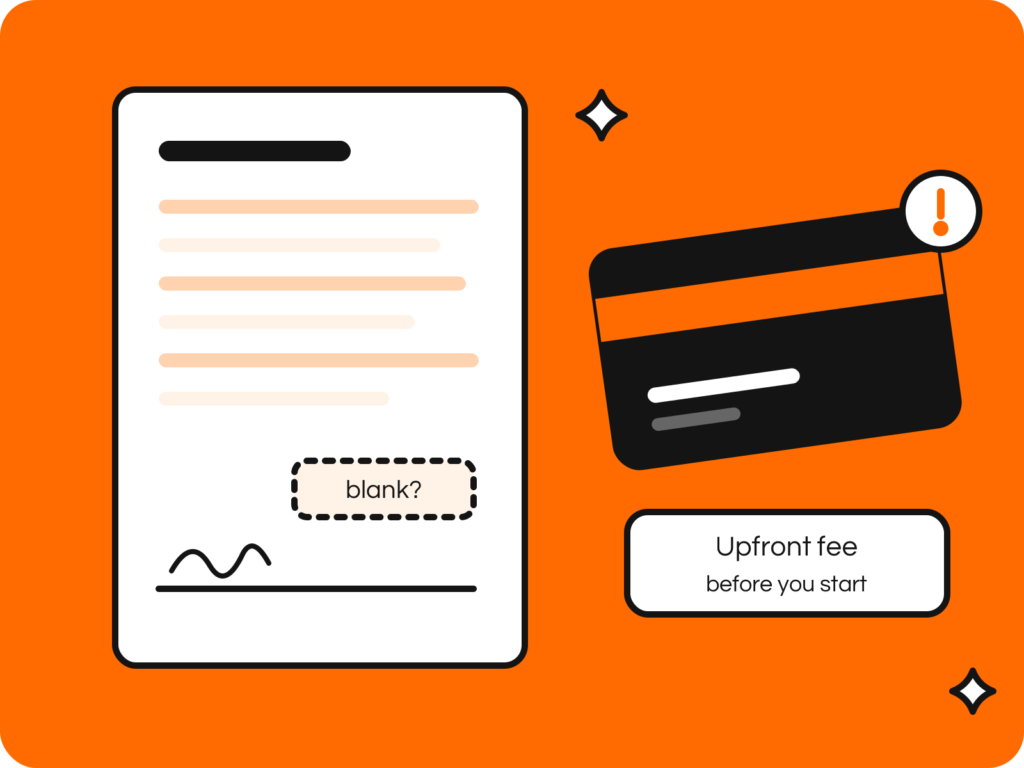
Alt: A contract with blank terms beside a payment card flagged with a warning about an upfront fee
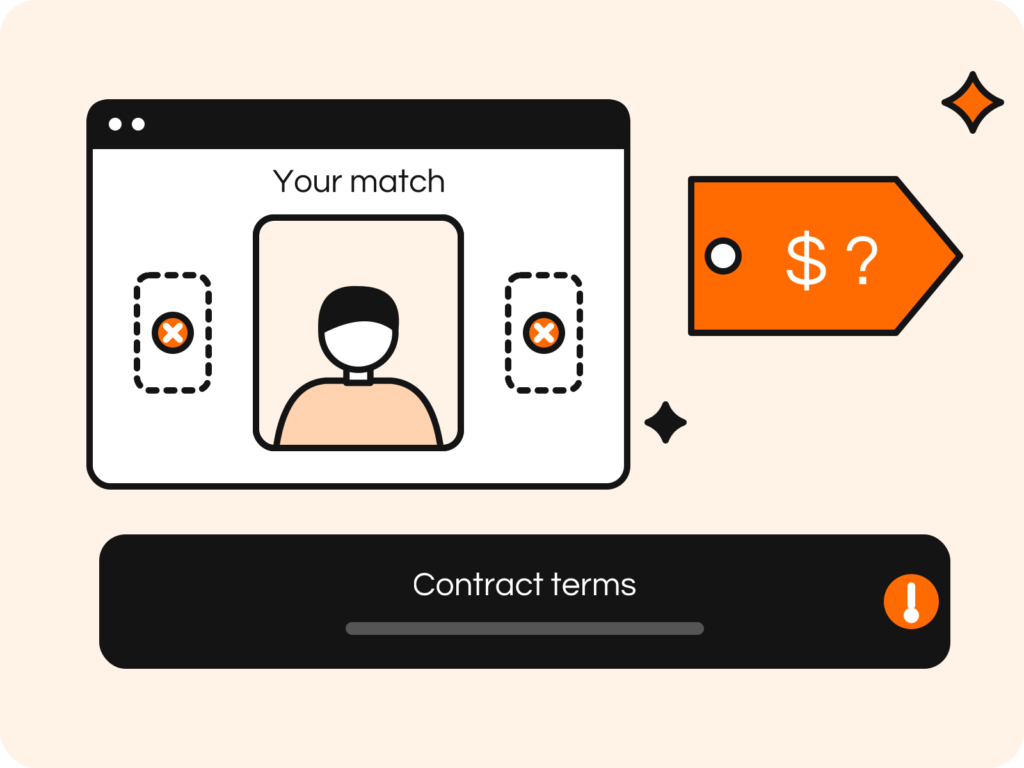
Alt: An agency screen showing one assigned candidate with no alternatives, a hidden price tag, and contract terms flagged with a warning
Hiring through an agency removes some of these risks. It also adds a few of its own.
Delegate’s process is built to answer each of these up front:
For a side-by-side look at agencies, see the best VA agencies for U.S. startup founders, or start with these eight things to know before choosing a dedicated VA.

Alt: A magnifying glass over a flag revealing a check mark, with a speech bubble saying not a flag
Some signals look like warning signs but usually aren’t. Ruling people out for them costs you good candidates.
If you’re new to hiring remotely, these are the most common mistakes businesses make, and this step-by-step hiring guide walks through the whole process.
All 13 plays, each split into what your assistant does, what you decide, and when it’s done. It also includes:
14 pages, free through the link below. Open it, save a copy, and share it straight with your assistant.
A generic or misaddressed application, vague answers about past work, refusing video calls, missing instructions on a test task, and any request for money upfront. With agencies, watch for no choice of candidate, hidden pricing, long lock-ins, and no written replacement terms.
Common warning signs include asking for fees before starting, requesting payment through gift cards or cryptocurrency, refusing video calls, or using a name that doesn’t match their profile. Pay only through traceable channels, to the name on your agreement.
No. Questions about the work, the tools, or the pay schedule are usually a good sign. The red flag is a candidate who asks nothing.
A choice of candidates, a vetting method that includes real work, published or clearly stated pricing, reasonable notice terms, and written replacement terms.
Use a clear job post with a built-in instruction, a short paid test task with a review call, and a written agreement before day one. Or hire through an agency that does the vetting with work simulations before you meet anyone.
Most of the warning signs in this article show up before a candidate’s first day. Catching them takes time: sorting applications, running tests, and following up on every vague answer.
Delegate does that part before you see a single profile. Every candidate on your shortlist has already completed paid work simulations, and only the top 1% of applicants make it through. You choose from up to 5, starting at $13 an hour, month to month, with free replacement for as long as you’re a client.
Book a strategy call and tell us the role you’re hiring for. We’ll show you what the shortlist would look like.