
Deploying a Remote Assistant to Clean Your CRM and Financial Books

There’s a version of your CRM that looks busy but tells you nothing useful. Contacts with no first names. Leads tagged from six months ago that were never followed up. Duplicate records for the same person filed under two different email addresses. Pipeline stages that don’t reflect where anything actually stands. And somewhere in a separate tab, your books have the same problem. Transactions sitting uncategorized. Expenses lumped under “miscellaneous” because nobody had time to sort them. A reconciliation that’s three weeks behind because every time it comes up, something more urgent takes priority. Neither of these problems is complicated. They’re just tedious, time-consuming, and easy to defer, which is exactly why they pile up until the mess is too big to ignore. According to Validity’s 2025 State of CRM Data Management report, 37% of CRM users lost revenue directly due to poor data quality, and disorganized books make it nearly impossible to answer basic questions about profitability without spending hours digging first. Together, they create an operational fog that makes running the business harder than it needs to be. A remote assistant can clear both, systematically, without costing you the hours you don’t have. Why CRM and Bookkeeping Debt Accumulate the Same Way The pattern is almost identical in both cases. When a business is small and moving fast, data hygiene feels like a low-priority problem. The founder knows who the important contacts are. The books can be held together through sheer familiarity. The mess is manageable enough that it doesn’t visibly hurt anything yet. Then the business grows. More contacts, more transactions, more complexity. The mess that was manageable at 50 contacts becomes genuinely dysfunctional at 500. The founder who was the single point of contact for everything now can’t remember which leads were warm and which were dead ends, because the CRM doesn’t reliably tell them anymore. By the time most businesses address this, the backlog is substantial. The cleanup that would have taken a few hours six months ago now takes weeks, and nobody wants to start it because there’s always something more immediately pressing. That’s how both problems compound quietly until they’re genuinely affecting how the business functions. What CRM Cleanup Actually Involves A CRM cleanup isn’t a single task. It’s a process that needs to be broken into phases and owned by someone with the time and patience to work through it systematically. The first phase is deduplication and data standardization. Your assistant goes through the contact database and merges duplicate records, standardizes name formatting, fills in missing fields where the information is findable, and removes contacts that are genuinely dead: bounced emails, people who’ve explicitly opted out, companies that no longer exist. The second phase is a lead status audit. Every contact in a pipeline stage gets reviewed against actual activity. Leads that haven’t been touched in 90 days get flagged for a re-engagement decision or archived. Stages being used inconsistently get normalized so the pipeline reflects reality rather than wishful thinking. The third phase is tagging and segmentation. Contacts get properly tagged by source, status, and industry, whatever segmentation your sales and marketing process actually uses. This is the step that turns a contact database into something you can act on, because you can now filter by segment rather than scrolling through undifferentiated records looking for a name you half-remember. The fourth phase, and the one most cleanup projects skip, is documentation. The assistant records the conventions used during cleanup so that new contacts get entered consistently going forward. Without this step, the database returns to its previous state within months, because data decay never stopped and nothing changed about how records get created in the first place. What Financial Book Cleanup Actually Involves The bookkeeping cleanup follows the same logic: break the backlog into manageable phases, work through it systematically, and build the conventions that prevent the next backlog. The first priority is the categorization backlog. Every uncategorized transaction gets reviewed and assigned to the correct account. This is straightforward but time-consuming, especially if the backlog spans several months and includes a mix of expenses that require context to categorize correctly. From there, the assistant works through reconciliation: bank and credit card statements get matched against what’s recorded in the accounting software, discrepancies get flagged for review rather than silently absorbed, and any transactions recorded in the wrong period get corrected. A remote assistant handling reconciliation on a regular cadence prevents the three-week backlog from forming in the first place, which is considerably easier than clearing it after the fact. Vendor and expense cleanup comes next. The same supplier filed under three slightly different names gets standardized. Expense categories that have been used loosely get tightened. Subscriptions and recurring charges that may no longer be active get flagged for the founder to review. For STR operators specifically, owner statements that have been delayed or inconsistently formatted get caught up and templated, so future statements are generated consistently rather than rebuilt from scratch each month. Why One Person Should Own Both CRM and bookkeeping cleanup are often treated as separate workstreams assigned to separate people. For smaller operations, there’s a real argument for having a single assistant own both during a cleanup project. The reason is context. A transaction that looks ambiguous in the books often makes sense when the assistant knows it came from a specific client relationship visible in the CRM. A contact record that’s hard to categorize in the pipeline becomes clearer when the assistant can cross-reference against invoice history. The two datasets inform each other, and an assistant who has visibility into both can resolve ambiguities faster than two separate people working in isolation and escalating questions back to the founder. For larger operations with genuinely complex books, a dedicated bookkeeper and a separate CRM specialist may make more sense. But for most growing businesses, a single dedicated assistant with clear instructions and the right system access can handle both workstreams in a single engagement and do
9 Short-Term Rental Bottlenecks That Signal VA Need

Nobody warns you that more bookings means more of everything else too. Here are nine specific moments where that “everything else” tips from manageable into a real operational bottleneck, and what each one is actually telling you. These usually develop gradually. A late-night guest message here, a missed social post there, a bookkeeping task pushed to next week. None of it feels urgent in isolation. Then the portfolio grows, and what was a minor inconvenience becomes a recurring pattern that’s quietly capping how far the business can scale. Growth slows down for plenty of operators not because demand dried up, but because the operation outgrew its support structure before anyone noticed. If you recognize several of these, that’s the signal. 1. Guest Messages Have Taken Over Your Evenings A single reservation generates multiple touchpoints before, during, and after a stay: parking questions, check-in instructions, Wi-Fi passwords, local recommendations, late checkout requests, maintenance concerns. As occupancy climbs, message volume climbs faster. What started as a handful of conversations a day becomes dozens, and you’re answering them during dinner or right before bed just to keep up. A dedicated assistant managing guest communication keeps response standards consistent without it costing you your evenings. 2. Response Times Are Quietly Slipping This isn’t just a satisfaction issue, it’s tied to how platforms read your property’s reliability over time. Slower responses show up in review language, and that language increasingly factors into search visibility. Most operators don’t notice the slip until bookings or rankings start moving the wrong direction, by which point the pattern’s already established. 3. Marketing Only Happens When You Have a Free Afternoon Content, social posts, direct booking updates, review responses, listing optimization, all of it gets pushed aside the moment something operational feels more urgent, which is most days. The result is a visible pattern: a few weeks of activity, then silence, while competitors who kept showing up steadily pull ahead. 4. Your Listings Haven’t Been Touched in Months Guest preferences shift. Search behavior evolves. Amenity expectations change. Meanwhile the listing description has stayed exactly the same since it was first published. A periodic listing audit that reviews recent guest feedback and updates copy, photos, and amenities to match keeps the listing aligned with what guests are actually searching for now. 5. Bookkeeping Is Always a Step Behind Revenue tracking, expense management, owner statements, reconciliation. None of it feels urgent in the moment, which is exactly why it piles up. When bookkeeping falls behind, profitability visibility goes with it, and tax season turns into a scramble instead of a formality. Financial administration is one of the first functions operators delegate once they realize how much mental overhead it’s quietly costing them. 6. Vendor Coordination Has Become a Second Job Cleaners, maintenance techs, inspectors, photographers, landscapers. The bigger the portfolio, the bigger the vendor network, and managing those relationships means constant scheduling, follow-up, and emergency coordination. Plenty of founders become accidental project managers simply because nobody else owns the process. Centralizing vendor communication and tracking into one owned workflow stops this from eating your week. 7. You’re the Single Point of Failure If every decision, approval, and issue routes through you personally, the business can’t scale past your personal bandwidth. The warning sign isn’t subtle: taking a day off feels impossible, or a vacation creates more anxiety than rest, or things visibly slow down the moment you’re unreachable. That’s founder dependency, and it’s a structural problem, not a personal one. 8. Admin Work Is Eating the Time Meant for Growth Spreadsheets, vendor coordination, routine messages, processing requests. All necessary, none of it the highest-value use of a founder’s time. When administrative execution consumes the hours that should go to acquisitions and strategy, growth slows for reasons that have nothing to do with the market. 9. Growth Is Creating Stress Instead of Freedom This is the one that matters most because it’s the clearest signal of all. Growth should expand your options. If every new property adds dread instead of momentum, the operational foundation hasn’t kept pace with the business, and at a certain point, that gap stops closing on its own. Sustainable growth eventually requires delegation, not because you’re falling short, but because the business has outgrown what one person can responsibly carry. What These Nine Have in Common Each of these signals points to the same underlying issue: operational capacity that hasn’t scaled alongside the portfolio. Guests expect fast, consistent communication. Platforms reward responsiveness. Marketing rewards consistency over intensity. Administrative work keeps expanding quietly in the background regardless of whether anyone’s watching it. Trying to absorb all of that personally eventually creates friction somewhere, usually in the place you can least afford it: guest experience, financial visibility, or your own bandwidth for the decisions that actually require your judgment. Add Support Before the Bottleneck Forces the Decision Most founders wait too long. They wait until response times have already slipped, until marketing has already gone quiet, until bookkeeping is already months behind. By then the cost has already been paid, it’s just not visible on a P&L yet. The better approach is adding support before any of these nine signals starts actively affecting performance, not after. If two or three of these felt familiar while reading, that’s not a coincidence. It’s the business telling you where the next bottleneck is going to form if nothing changes. Explore Delegate Delegate helps short-term rental operators eliminate operational drag through dedicated remote professionals who integrate directly into daily workflows: guest communication, listing management, vendor coordination, administrative operations, bookkeeping support, CRM management, marketing execution, and calendar and reservation management. Whether you manage five units or fifty, the goal is the same: operational capacity that grows with the business instead of straining against it. Book a strategy call to find out where support would help most. Explore More Resources Schedule A Call
How Live Review Scraping Is Quietly Dropping Your Listing Ranks

Your listing could have a 4.9 rating, competitive pricing, and a fast response time — and still be losing ground in search to a property with a 4.7. The difference is probably sitting in your reviews. Not the star rating. The actual words. Modern booking platforms and AI-powered travel discovery tools don’t evaluate listings the way they did five years ago. The operational details that show up in guest language — response delays, Wi-Fi complaints, check-in confusion, noise mentions — are increasingly factored into how search systems categorize and rank properties. A pattern doesn’t need to tank your rating to affect your visibility. It just needs to appear often enough for an algorithm to associate your property with it. Most operators don’t notice the connection until bookings slow down. By then, the ranking signal has already been established. How Modern Travel Search Actually Works The way guests find properties has shifted. Travelers increasingly use AI-powered discovery tools — on platforms and through third-party search engines — that go beyond filtering by dates and location. They ask natural-language questions: “Best Airbnb for remote workers with fast Wi-Fi” “Quiet vacation rental for families near the beach” “Responsive host, dedicated workspace, easy check-in” These systems don’t just scan listing titles for keyword matches. They analyze review content, identify recurring guest language, and use that pattern data to surface properties that consistently deliver on specific expectations. This means your reviews have become more than social proof. They’ve become search signals — and they’re being read whether you’re managing them or not. The Hidden Ranking Problem Most Hosts Miss A property can hold a strong overall rating while still sending negative signals into search systems. The issue isn’t the star score — it’s the language patterns buried inside the feedback. Consider comments like these: “The host eventually got back to us.” “Wi-Fi was fine once we reset the router.” “The workspace worked for a few days.” “AC took a while to cool the room down.” None of these tank a rating. But when they appear across multiple reviews, they create a pattern — and algorithms are increasingly built to detect exactly that. Platforms begin associating the property with communication delays or inconsistent amenities, even if the overall score remains high. Visibility quietly erodes while the operator is looking at the wrong metric. This is why some listings with strong ratings keep slipping in search while competitors with lower averages climb. The difference often lives in the review text, not the stars. Why Search Visibility Is an Operational Problem Search performance and operational execution are no longer separate functions. Every guest interaction generates data. Every maintenance issue creates feedback. Every response delay shapes perception — and that perception feeds into how platforms categorize and rank your listing. A consistently well-run property generates consistently strong review language. Strong language creates clearer relevance signals. Clearer signals improve search visibility. More visibility drives more bookings. The cycle compounds in your favor — or against you, depending on what the reviews actually say. STR operators who understand this relationship early build operational systems designed to produce strong review language, not just strong ratings. It’s a different target — and a more accurate one. What to look for: Recurring operational complaints that may be creating negative signals — slow communication, Wi-Fi issues, noise, check-in confusion, maintenance delays. These are the patterns that get associated with your property over time regardless of your overall rating. Recurring praise that isn’t reflected in your listing copy — fast Wi-Fi, quiet environment, dedicated workspace, walkable location, seamless check-in, family-friendly layout. These are search assets you’re likely leaving on the table. Most operators who run this exercise find the same thing: guests are consistently praising specific features that the listing barely mentions, while minor operational issues appear just frequently enough to create an algorithmic association. Both are fixable — but only once you can see them. Turning Review Intelligence Into Listing Architecture Once you’ve identified the patterns, your assistant can systematically translate that data into listing updates across every content layer: Listing titles — updated to reflect the specific guest-validated strengths that appear repeatedly in reviews. Property descriptions — rewritten to lead with features guests consistently praise rather than features the host assumed were important. Amenity sections — restructured to prominently feature what remote workers, families, or business travelers are specifically searching for. Photo captions — updated with language that mirrors what guests actually say about the space. FAQ content — revised to address the recurring friction points that show up in reviews before they generate another negative mention. Direct booking pages and social descriptions — aligned with the same language to create consistent signals across platforms. The objective isn’t keyword stuffing — it’s alignment. The language your guests use to describe your property should match the language your listing uses to present it. When those two things converge, relevance signals strengthen across both platform algorithms and AI-powered discovery tools. Why This Needs to Be Ongoing Treating listing optimization as a one-time project is one of the most common mistakes in STR operations. Guest preferences shift. AI-driven travel search behavior continues evolving. What mattered in a traveler’s search 12 months ago isn’t necessarily what they’re prioritizing today. Remote work amenity demand, for example, has restructured what “a good workspace” means — guests now search specifically for dual monitors, ergonomic chairs, and gigabit internet, not just “a desk.” Properties that updated their listing language to reflect that shift gained search relevance. Those that didn’t are still describing a “home office area.” High-performing operators assign this review analysis and content refresh cycle to a dedicated assistant as an ongoing operational function — not a quarterly marketing project. The audit becomes part of standard operations. The listing stays current. The search signals stay strong. Operational Excellence Is the Algorithm The properties that rank well aren’t always the ones with the best photography or the most aggressive pricing strategies. They’re often the best-operated properties — the ones where strong
Why High-Growth Startups Are Moving From Traditional Agency Models to Dedicated VAs

Startups looking to scale operations historically had a limited set of options: hire internally, work with a traditional outsourcing provider, or partner with a massive Business Process Outsourcing (BPO) company. Those models sufficed when businesses primarily needed raw labor capacity. Today, the operational demands of high-growth startups require a alternative approach. Founders are no longer looking for people to simply answer support tickets, process requests, or follow basic rigid scripts. They need team members who can think critically, understand context, manage workflows, and operate as genuine extensions of the brand. This shift is the primary reason why tech companies are moving away from traditional agency models and embracing dedicated virtual assistants. The conversation has evolved beyond finding low-cost labor solutions; it is centered on building operational leverage. The companies scaling most effectively recognize that consistency, ownership, and institutional knowledge matter far more than simply adding headcount. The Evolution of Outsourcing The legacy outsourcing industry was built around transaction volume. Massive BPO providers excelled at creating systems capable of handling highly standardized, repetitive customer support, data entry, and back-office operations. When tasks are completely predictable, rotating shifts perform effectively. The challenge emerges when businesses require deep context. Startups operate in environments that change constantly. Processes evolve, priorities shift, new features launch, and user expectations fluctuate. The more dynamic the operational environment becomes, the less effective generalized staffing models tend to be. This is where founders experience friction. The business expands, but support remains fragmented. Knowledge is scattered across rotating shifts, context is lost, and consistency becomes difficult to maintain. Instead of creating relief, the traditional support model adds significant management overhead. The Problem With Traditional Agency and BPO Models Traditional outsourcing agencies prioritize transactional efficiency over systemic effectiveness. This relies on a rotating support model where multiple team members touch the same workflow at different intervals. Shift changes introduce handoff friction, and knowledge becomes distributed across individuals rather than accumulated within a single operator. For a scaling startup, this creates three key vulnerabilities: Inconsistency: Customers experience highly variable communication styles and process execution depending on who is online during a given shift. Institutional Knowledge Loss: When support responsibilities rotate continuously, no single individual develops deep familiarity with the business. Founders end up repeatedly re-explaining the same processes. Management Complexity: Founders outsource to reduce workload, only to discover they have become full-time managers of an unintegrated outsourced team. This infrastructure stalls startups that rely on execution precision, adaptability, and operational speed. Why Dedicated Virtual Assistants Are Gaining Momentum The dedicated placement model operates differently. Rather than assigning work to an anonymous pool of available resources, it embeds a specific professional inside your company infrastructure. That individual learns your systems, workflows, communication styles, tools, and operational standards. In a rotating model, information is constantly being redistributed. In a dedicated model, knowledge accumulates. Every customer interaction, process improvement, and documented workflow remains with the same person. As the months pass, the assistant develops the internal context required to transition from task completion to total operational ownership. This breaks the pattern where the founder remains the central bottleneck through which every exception flows. Beyond Administrative Support The modern virtual assistant has evolved past basic administrative upkeep like calendar routing and inbox organization. High-growth startups rely on dedicated remote professionals for core infrastructure tasks: CRM management Marketing operations Customer success support Project coordination Automation management Bookkeeping Executive assistance Lead generation support Dedicated assistants have evolved from temporary support staff into critical components of a company’s operational infrastructure, helping companies scale. Removing the International HR Burden Founders often hesitate to source global talent independently due to compliance friction: international employment laws, payroll management, cross-border tax regulations, and benefits administration. The dedicated placement model removes this administrative weight. Instead of managing global infrastructure internally, founders can focus entirely on integrating talent into their daily workflows while an operational partner manages the backend compliance, legalities, benefits, payroll, and international HR. This eliminates hiring friction while preserving complete long-term flexibility. BPO vs. Virtual Assistant: The Strategic Verdict The distinction between models is an architectural choice, not a cost calculation. One model optimizes for sheer volume; the other optimizes for operational ownership. If your organization requires high-volume, highly standardized processing that can be executed interchangeably by multiple individuals, a traditional BPO model remains effective. However, if your business requires contextual understanding, workflow documentation, long-term knowledge retention, and strategic execution, a dedicated virtual assistant creates the highest return on investment. The businesses that scale most effectively build systems that reduce dependency on founders while permanently increasing execution quality across the organization. That is exactly where dedicated virtual assistants deliver their greatest value. Ready to Build Operational Leverage? Delegate helps founders, startups, and growing teams build scalable support systems through dedicated remote professionals who integrate directly into your workflows. From executive assistance to CRM operations, marketing support, and automation setup, Delegate sources top-tier talent while managing compliance, payroll, and international benefits behind the scenes. Book a strategy call with Delegate today. Explore More Resources Schedule A Call
Why Dynamic Pricing Software Is Not Enough to Protect Your Yield

For many short-term rental operators, dynamic pricing software feels like the final piece of the puzzle. You connect your listings, set your parameters, and let the algorithm adjust rates automatically. Revenue management suddenly feels automated. Pricing becomes smarter. Occupancy improves. Many operators discover something frustrating during peak season: despite having sophisticated pricing software in place, revenue still leaks. Last-minute gaps remain unfilled. Holiday weekends underperform. Midweek vacancies appear unexpectedly. Cancellation windows create revenue opportunities that nobody notices. The software is working exactly as designed. The problem is that software was never designed to replace active revenue management—it was designed to support it. This distinction becomes especially important during high-demand seasons when small pricing mistakes can translate into thousands of dollars in lost revenue across a portfolio. Automation creates a baseline. Optimization creates the upside. The Hidden Revenue Leak Most Operators Never See One of the biggest misconceptions in short-term rental revenue management is that dynamic pricing software is a “set it and forget it” solution. Many operators assume that once automation is activated, pricing is fully optimized. Dynamic pricing tools process historical trends, occupancy signals, booking velocity, and market-wide demand indicators. They cannot always see the operational nuances that impact real-world performance: A sudden local festival or major concert announcement. An unexpected convention shifting localized hotel demand. A competitor discounting aggressively out of panic. A cluster of last-minute cancellations creating sudden inventory pressure. These hyper-local variables create opportunities that algorithms either react to too slowly or miss entirely. The result is small amounts of revenue leakage occurring every day. Over an entire summer season, those seemingly minor inefficiencies compound. Why Peak Season Makes the Problem Worse During slower seasons, pricing mistakes have a limited financial impact. During peak season, every unbooked night becomes a major loss. Every vacancy represents premium inventory sitting unused. At the same time, operational complexity increases. Bookings arrive faster, cancellations require immediate action, minimum stay requirements become fluid, and multiple distribution channels require monitoring. Founders spend hours reviewing listing channels, booking platforms, and property management systems trying to identify opportunities. Most operators eventually face a difficult choice: spend valuable executive time monitoring revenue performance every day, or accept that revenue leakage will occur. The strongest operators choose a third option: they delegate yield protection. The Daily Yield Audit Workflow Revenue management should not depend on a founder checking dashboards between meetings. It must operate as a repeatable daily workflow. This is where a dedicated assistant creates significant leverage. By implementing a Daily Yield Audit Workflow, portfolios combine automation with human oversight to spot opportunities before they vanish. A daily audit focuses on three main buckets: 1. Distribution Monitoring Listings must be reviewed across booking platforms, direct channels, and property management systems to ensure pricing consistency, availability accuracy, and booking visibility. Channel synchronization errors occur frequently and can leave inventory unavailable during a high-demand window. 2. Competitive Set Analysis Revenue opportunities emerge when your direct competitors adjust pricing, occupancy, or availability. Monitoring comparable properties allows you to identify situations where your pricing should move more aggressively or protect yield defensively. 3. Stay Restriction Optimization Many dynamic pricing tools focus heavily on nightly rates but miss minimum stay logic. A three-night minimum during a soft midweek period suppresses bookings. A one-night minimum during a major event weekend leaves revenue on the table. Manual oversight ensures these restrictions match real-time demand. Creating Pricing Guardrails The conversation is not software versus people. Software processes data; humans provide judgment. The idea of allowing someone else to influence revenue decisions can feel risky to a founder. The solution is creating guardrails rather than avoiding delegation. An assistant does not need unlimited authority to improve yield performance. Operators can establish clear decision parameters: Price increases above a certain threshold require automatic approval. Last-minute vacancy adjustments can occur within predefined dollar ranges. Minimum stay changes are executed based on fixed occupancy benchmarks. These frameworks allow assistants to act quickly while leadership maintains strategic control. Protecting Booking Velocity Yield management is about balancing revenue and occupancy. An overpriced property generates zero yield if it remains vacant. This balance is critical on platforms like Airbnb and Vrbo, where booking velocity directly influences visibility and search ranking performance. Listings that generate consistent booking activity perform better algorithmically over time. An assistant monitors booking pace, identifies underperforming dates, and adjusts within approved parameters to maintain momentum. The Future of Revenue Management Many operators spend significant capital acquiring advanced software, yet few invest in the operational discipline required to maximize its value. Technology alone does not create results—execution does. If you want to protect revenue, close booking gaps, and maximize peak-season performance, someone needs to own the daily revenue management process. The question is whether that person will continue to be you. Ready to Protect Your Portfolio’s Yield? Delegate helps short-term rental operators build operational support systems that create leverage without adding complexity. Our dedicated assistants plug directly into your workflows to support yield management, competitive analysis, distribution monitoring, guest communication, CRM management, and operational coordination. Get started with Delegate today. Explore More Resources Schedule A Call
5 Essential SOP Templates Every STR Operator Needs in 2026
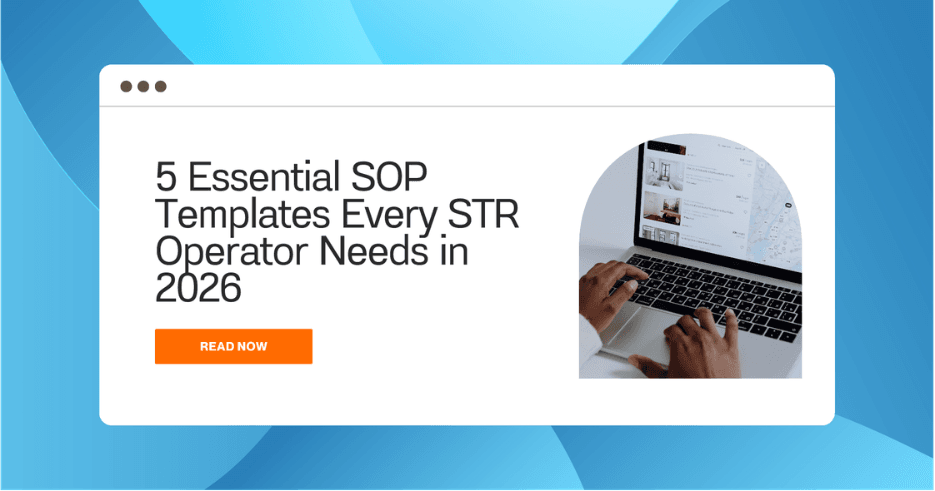
Short term rental businesses rarely fail because operators lack ambition. Most operational breakdowns happen because processes only exist inside someone’s head. One cleaner gets different instructions than another. Guest communication changes depending on who is replying. Maintenance issues are handled inconsistently. Reviews get answered emotionally instead of strategically. Small operational mistakes compound because no repeatable process exists behind the business. This is why Standard Operating Procedures, or SOPs, have become a requirement inside modern hospitality operations. The problem is that most SOPs fail. Operators write them like corporate manuals that no one actually uses. They become long, overly detailed files buried inside file storage systems that team members stop reading after the first week. The strongest STR operators in 2026 approach SOPs differently. Instead of creating massive documents, they create operational checklists designed for execution. Good SOPs are: simple actionable fast to follow easy to update operationally clear Most importantly, they reduce founder dependency. This guide breaks down five of the most important operating procedure templates modern operators should have in place, along with structures you can customize for your business. Why SOPs Matter More Than Ever in 2026 The operational demands of short term rentals have changed dramatically. Guests expect faster responses. Booking platforms reward operational consistency. Reviews now directly influence visibility, occupancy, and conversion rates. Even minor operational failures affect ranking performance. Operators manage increasingly complex systems involving: property management software smart locks automation workflows cleaner coordination maintenance vendors guest messaging platforms Without SOPs, businesses become dependent on founder memory. That creates operational bottlenecks. The goal of an SOP is operational consistency that works even when the founder is offline. Template 1: The Guest Messaging Flow SOP Guest communication is one of the most important operational systems management tasks inside an STR business. It directly impacts guest satisfaction, review scores, and platform rankings. Strong messaging SOPs break communication into stages instead of relying on reactive responses. Inquiry Stage Response time target Booking qualification questions Property fit verification House rules disclosure Booking Confirmation Stage Confirmation message template Check-in preparation instructions Property access overview Pre Check-In Stage Smart lock instructions WiFi details Parking information Emergency contact process During Stay Stage Response escalation procedures Maintenance coordination workflow Communication tone standards Check-Out Stage Check-out instructions Cleaner notification process Review request timing Template 2: The Turnover Coordination SOP Turnovers are a high-risk operational moment because multiple moving parts must happen correctly under time pressure. Strong turnover SOPs improve accountability across cleaners, inspectors, and operations teams. Checkout Alert: Guest checkout confirmation and cleaner notification timing. Cleaner Coordination: Assigned cleaner confirmation, linen replacement, and supply restocking. Inspection Workflow: Inspection photo requirements, property walkthrough standards, and smart lock reset. Damage Review: Damage documentation standards, escalation process, and owner notification. Template 3: The Maintenance Triage SOP Maintenance issues become chaos when teams cannot prioritize urgency. A strong Maintenance Triage SOP helps teams make fast decisions while protecting the guest experience. Step 1: Categorize the Issue Emergency: Flooding, power outage, gas leak, broken entry, no AC in extreme heat. Non-Emergency: Dripping faucet, cosmetic damage, low battery, minor appliance concerns. Step 2: Escalation Workflow: Define who to contact for emergencies versus scheduled maintenance. Step 3: Resolution: Vendor notes, completion photos, and cost tracking. Template 4: The Bad Review Protocol SOP Negative reviews are inevitable. A strong Bad Review SOP removes emotion from the response process. Pause: No immediate replies. Review the complaint and verify facts. Draft: Acknowledge the concern professionally. Avoid defensiveness. Keep the tone concise. Internal Approval: Send the draft to a manager for policy review. Publish: Post the response and document operational lessons. Template 5: The Damage Dispute SOP Disputes are a routine part of modern STR businesses. Without a structured process, operators lose claims due to incomplete documentation. Evidence Collection: Property photos, time-stamped documentation, and cleaner reports. Communication: Screenshot conversations and save all platform logs. Submission: Upload evidence immediately with a concise, factual summary. Download Our Full Playbooks & Templates Building these systems from scratch takes time. To help you accelerate your operational maturity, we have compiled our most effective SOPs into a single resource. Visit our Playbooks Page to download our full library of STR templates. These are the same frameworks we use to help our clients remove themselves from daily operations. The Real Purpose of SOPs Many operators think SOPs are about organization. In reality, SOPs are about reducing founder dependency. Without systems: every issue returns to the owner every exception requires approval every workflow depends on memory Strong SOPs create operational consistency. They allow businesses to scale without forcing the founder to personally manage every moving part. The best SOPs are not the longest. They are the clearest. Strong operators build checklists teams can execute under pressure. Because at scale, hospitality businesses succeed through operational bottlenecks being removed, not founder heroics. Explore Delegate Delegate.co helps property management companies build scalable support systems through dedicated virtual assistants trained for Standard Operating Procedures. Support areas include: tenant communication support maintenance coordination bookkeeping support administrative support Get started at dev.delegate.co/. Explore More Resources Schedule A Call
The “Guest Experience Specialist”: Why This Role Is Replacing the Generalist Property Manager

The short-term rental industry has evolved far beyond what most operators expected even a few years ago. What was once a relatively straightforward hospitality business now functions more like a fast moving operations company layered on top of real estate. Guests expect instant responses, seamless check ins, proactive communication, personalized experiences, and immediate issue resolution regardless of the time of day. At the same time, platforms like Airbnb increasingly reward operational consistency. Response times influence visibility. Guest reviews affect ranking. Small operational failures compound quickly into lower occupancy, weaker conversion rates, and reputational damage. This shift has quietly transformed one of the most important roles inside modern hospitality businesses. The traditional “property manager” or “virtual assistant” role is no longer enough for scaling operators. In its place, a more specialized role is emerging across the industry: the Guest Experience Specialist. This role is not simply administrative support under a different title. It reflects a deeper operational change happening inside short term rental businesses. The Guest Experience Specialist is now responsible for protecting guest satisfaction, maintaining operational continuity, and preserving the reputation systems that directly affect revenue.Increasingly, the businesses scaling successfully in 2026 are not hiring generic support staff. They are hiring specialists trained around the guest journey itself. Why the Traditional Property Manager Model Is Changing For years, many operators hired support staff with fairly broad expectations. A property manager or assistant might answer guest messages, coordinate cleaners, respond to maintenance requests, and help with scheduling all at once. While this worked at smaller scale, the modern hospitality environment has become too operationally demanding for generalized support alone. Today’s guests communicate differently. They expect near real time responses and often judge the entire quality of a stay based on operational smoothness rather than simply the physical property itself. A delayed check in message or unresolved smart lock issue now impacts much more than guest satisfaction. It can influence review scores, search rankings, and future booking visibility. At the same time, operators themselves are managing far more operational complexity than before. Between OTA platforms, automation tools, smart devices, dynamic pricing systems, and communication platforms, hospitality operations now require someone who understands both service and systems. This is where the Guest Experience Specialist role becomes essential. Rather than acting as a general administrative assistant, the specialist operates as a dedicated owner of the guest lifecycle. Their responsibility is not simply answering messages. Their responsibility is ensuring the guest experience remains operationally consistent before, during, and after every stay. For years, many operators hired support staff with fairly broad expectations. A property manager or assistant might answer guest messages, coordinate cleaners, respond to maintenance requests, and help with scheduling all at once. While this worked at smaller scale, the modern hospitality environment has become too operationally demanding for generalized support alone. Today’s guests communicate differently. They expect near real time responses and often judge the entire quality of a stay based on operational smoothness rather than simply the physical property itself. A delayed check in message or unresolved smart lock issue now impacts much more than guest satisfaction. It can influence review scores, search rankings, and future booking visibility. At the same time, operators themselves are managing far more operational complexity than before. Between OTA platforms, automation tools, smart devices, dynamic pricing systems, and communication platforms, hospitality operations now require someone who understands both service and systems. This is where the Guest Experience Specialist role becomes essential. Rather than acting as a general administrative assistant, the specialist operates as a dedicated owner of the guest lifecycle. Their responsibility is not simply answering messages. Their responsibility is ensuring the guest experience remains operationally consistent before, during, and after every stay. The Guest Experience Specialist Owns the Entire Guest Journey The modern guest journey begins long before a guest arrives at the property. One of the most important responsibilities of a Guest Experience Specialist is managing the pre stay experience in a way that reduces operational risk while improving guest confidence. This includes handling booking inquiries, verifying guest details, coordinating ID verification when necessary, communicating property expectations clearly, and preparing guests for arrival. Skilled specialists also understand how to increase revenue through operational upselling, such as offering early check in, late checkout, transportation coordination, or mid stay cleanings in a way that feels helpful rather than transactional. The importance of this stage is often underestimated. Many operational problems originate before the guest even arrives because expectations were unclear or communication felt inconsistent. Once the guest is checked in, the role becomes even more operationally critical. During the stay, the Guest Experience Specialist acts as the frontline operator responsible for maintaining response quality and resolving issues quickly. This may involve troubleshooting smart lock access, coordinating with cleaners or maintenance teams through tools like Slack or Breezeway, escalating operational concerns, updating internal systems, or communicating with guests across platforms such as Airbnb, Vrbo, Guesty, or Jurny. This operational coordination layer is what separates a strong hospitality business from one that constantly feels reactive. In many ways, the specialist becomes the operational nervous system of the business. They maintain continuity between guests, vendors, cleaners, systems, and the founder without requiring the operator to personally manage every interaction. The role also continues well after checkout. Post stay operations have become increasingly important because reviews now function as both marketing and algorithmic reputation signals. Guest Experience Specialists are often responsible for review follow ups, review responses, issue documentation, and dispute resolution processes such as AirCover reimbursement claims. This requires a combination of communication skill, operational organization, and platform familiarity. The strongest specialists understand how to protect both guest relationships and business revenue simultaneously. The KPIs That Define a Great Guest Experience Specialist One reason this role is becoming more specialized is because operators are beginning to measure hospitality operations much more rigorously. In the past, support staff were often evaluated informally based on whether guests “seemed happy.” Modern operators are increasingly using measurable operational KPIs instead. One of the
10 Property Management Tasks to Outsource to Virtual Assistants in 2026

Property management has changed significantly over the past few years. For small property management companies especially, operational complexity now grows faster than headcount. More units create more communication, more coordination, more follow-ups, and more administrative pressure. At first, many operators attempt to manage everything internally. Eventually, however, most teams hit the same wall: The issue is not demand. It is operational capacity. This is why more property management companies are turning to virtual assistant services for property management to support day-to-day operations without dramatically increasing payroll overhead. The key, however, is knowing what to outsource, and how to measure whether it is actually working.This guide breaks down 10 of the highest-impact property management tasks to outsource to dedicated virtual assistants, along with measurable KPIs operators can use to evaluate performance. Why Small Property Management Companies Are Outsourcing More Operational Work Many property managers initially assume outsourcing only applies to basic administrative tasks. In reality, modern dedicated virtual assistants can support: tenant communication maintenance coordination reporting workflows scheduling bookkeeping support operational systems management The operational advantage is not simply reducing workload. It is creating consistency across the business while freeing internal teams to focus on growth, resident experience, and strategic operations. 1. Tenant Communication Support Tenant communication is one of the most time-consuming parts of property management. Questions about: maintenance rent reminders move-in details parking lease updates property policies can consume hours every day. Dedicated virtual assistants can manage: inbox monitoring response routing resident follow-ups escalation coordination FAQ responses KPI to Track Average response time Tenant satisfaction score Resolution turnaround time 2. Maintenance Coordination Maintenance requests often become operational bottlenecks because they involve multiple moving parts: tenant communication vendor coordination scheduling follow-ups completion verification Virtual assistants can help manage maintenance workflows by: logging requests coordinating vendors scheduling visits tracking completion status updating tenants KPI to Track Average maintenance resolution time Number of unresolved tickest Vendor response speed 3. Leasing Inquiry Management Many property managers lose potential tenants simply because inquiries are answered too slowly. Virtual assistants can support leasing operations through: inquiry responses showing coordination follow-up communication lead tracking application routing KPI to Track Lead response time Showing conversion rate Inquiry-to-application ratio 4. Administrative Task Management Administrative work compounds quickly inside growing property management companies. This includes: data entry document organization calendar coordination invoice tracking reporting support Outsourcing administrative tasks allows internal teams to stay focused on higher-value operational work. KPI to Track Founder or manager hours saved weekly Administrative backlog reduction Task completion turnaround time 5. Rent Collection Follow-Ups Late rent follow-ups are operationally repetitive but critically important. Virtual assistants can help: send reminders monitor payment status coordinate follow-up communication escalate unresolved balances KPI to Track On-time payment percentage Delinquency reduction rate Follow-up completion consistency 6. Vendor Communication Management Managing cleaners, contractors, maintenance teams, landscapers, and vendors creates constant communication overhead. Dedicated virtual assistants can coordinate: schedules confirmations updates invoice collection operational follow-through KPI to Track Vendor response time Scheduling accuracy Missed appointment reduction 7. CRM and Database Management As tenant and lead databases grow, data quality often declines. Duplicate contacts, inconsistent records, and outdated information create operational friction throughout the business. Virtual assistants can maintain: CRM organization contact cleanup lead tracking database accuracy reporting consistency KPI to Track CRM accuracy rate Duplicate record reduction Lead tracking completion 8. Property Listing Management Property managers overseeing multiple listings often struggle to keep descriptions, pricing notes, amenities, and platform information updated consistently. Virtual assistants can support: listing updates platform consistency image uploads calendar updates property detail management KPI to Track Listing update turnaround time Listing accuracy consistency Booking platform error reduction 9. Bookkeeping Support Financial organization becomes increasingly difficult as portfolios scale. Virtual assistants trained in bookkeeping support can assist with: expense categorization reconciliation preparation invoice tracking financial reporting organization payment documentation KPI to Track Reconciliation completion speed Expense tracking accuracy Reporting turnaround time 10. Review and Reputation Management Online reputation increasingly impacts occupancy, leasing interest, and tenant trust. Virtual assistants can support reputation management through: review monitoring response drafting follow-up communication issue escalation resident feedback tracking KPI to Track Review response time Average review rating Reputation issue resolution speed How to Know What to Outsource First Many property managers make the mistake of outsourcing random tasks instead of identifying operational bottlenecks first. A better approach is asking: “What operational work repeats constantly but does not require founder-level decision making?” That is usually the best starting point. For many small property management companies, the first areas outsourced successfully are: tenant communication scheduling maintenance coordination administrative support As systems mature, businesses often expand into: bookkeeping CRM management operational reporting workflow automation The Goal Is Not Just Delegation. It Is Operational Capacity. The strongest operators in 2026 are not necessarily working harder. They are building systems that allow the business to operate consistently without requiring constant managerial involvement in every workflow. That is where dedicated virtual assistants create the most value. Not simply by reducing workload.But by creating operational leverage. Explore Delegate Delegate helps property management companies build scalable operational support systems through dedicated virtual assistants trained for real operational workflows. Support areas include: tenant communication support maintenance coordination bookkeeping support CRM management administrative support operational reporting scheduling coordination Get started now at dev.delegate.co/. Explore More Resources Schedule A Call
Stop Losing Guests to Bad Cleaners And Do This Instead

“If you are still chasing cleaners, you are not really scaling.”
That observation captures a structural issue in short term rental operations that many operators underestimate. In a recent Sip & Scale episode, the discussion focuses on one of the most operationally critical yet overlooked components of the business: building a cleaning system that can scale reliably as your portfolio grows.
The #1 Reason Small STR Hosts Struggle to Grow
“The industry needs to set clear standards.”
That statement reflects a growing reality in the short term rental space. In a recent Sip & Scale episode, the discussion centers on a critical shift happening across property management businesses: operators are no longer limited by demand, they are limited by execution capacity.