As short-term rental (STR) businesses grow, one challenge consistently rises to the surface: guest communication at scale.
Listings expand across multiple platforms. Message volume increases. Expectations for fast, thoughtful responses remain high. And suddenly, what once felt manageable becomes a constant operational demand.
At this stage, many operators begin exploring virtual assistants.
But not all virtual assistants are created equal, especially when the role involves guest-facing communication, real-time problem-solving, and maintaining a consistent brand experience.
This is where the Philippines stands out.
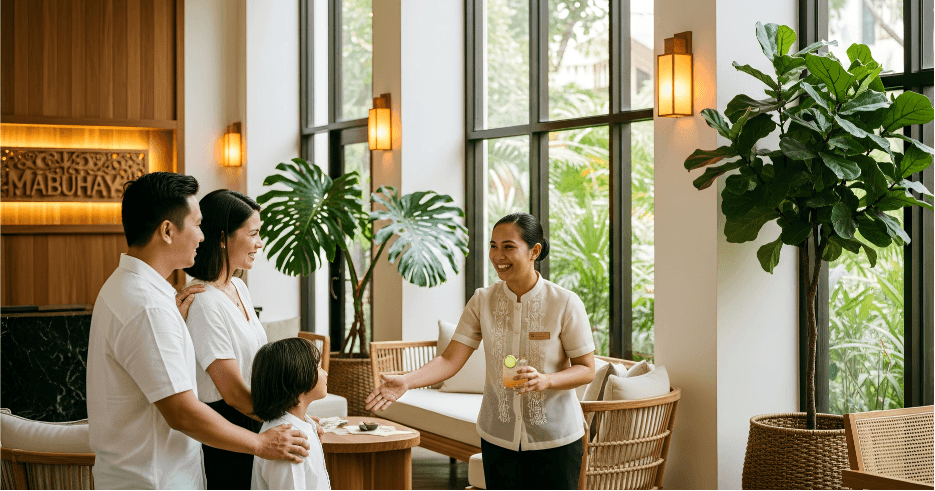
Over the past decade, Filipino virtual assistants have become a cornerstone of global remote teams. In the STR industry specifically, they bring a unique combination of cultural alignment, communication skills, and operational experience that makes them particularly effective.
Often, this advantage is described informally as a “hospitality gene.”
While not literal, the phrase captures something real: a natural alignment with service-oriented roles that goes beyond technical ability.
Cultural Compatibility: The Foundation of Great Guest Experience
At the heart of any successful STR operation is the guest experience.
And the guest experience, more often than not, is shaped through communication.
This is where Filipino virtual assistants consistently excel.
Patience in handling guest concerns, even under pressure
Empathy when addressing complaints or issues
Politeness and professionalism in written and verbal communication
A strong inclination toward helping and problem-solving
These qualities are not easily taught through training alone. They are reinforced through cultural norms, which makes them highly valuable in roles where tone and responsiveness matter.
In addition, the Philippines is the third-largest English-speaking country in the world, with English used as a primary language in education, business, and media.
This leads to:
Clear and natural written communication
Minimal language barriers with international guests
The ability to adapt tone depending on the situation (formal, friendly, urgent)
For STR operators, this means guest interactions feel smooth, human, and aligned with brand standards, without requiring constant oversight.
Time Zone Flexibility: Rethinking the “Offshore” Concern
One of the most common concerns founders have when hiring internationally is time zone alignment.
At first glance, the Philippines’ location in Southeast Asia may seem like a barrier for businesses operating in the U.S. or Europe.
Work overnight shifts aligned with U.S. daytime hours
Adjust schedules to cover peak guest messaging periods
Provide real-time responses during critical booking windows
For STR businesses, this flexibility is especially valuable.
Guest inquiries don’t follow a 9-to-5 schedule. Messages can come in late at night, early in the morning, or across multiple time zones.
Having a virtual assistant who is actively monitoring and responding during these peak periods ensures:
Faster response times
Higher booking conversion rates
Improved guest satisfaction
Rather than being a limitation, time zone differences can actually become an operational advantage, allowing for extended coverage without requiring founders to stay online around the clock.
However, in the context of STR operations, it is increasingly becoming a strategic one.
Guest communication is not a background task, it is a core driver of bookings, reviews, and long-term success.
By working with virtual assistants who naturally align with hospitality-driven roles, operators strengthen one of the most important aspects of their business.
The Philippines has emerged as a leading source of this kind of talent, not by chance, but through a combination of culture, education, and industry experience.
The Right Fit for a Service-Driven Industry
Short-term rentals are, at their core, a hospitality business.
And hospitality is not just about systems or automation, it’s about how guests feel throughout their experience.
Filipino virtual assistants bring a unique balance of human warmth and operational capability, making them particularly well-suited for this environment.
For operators looking to scale without compromising guest experience, that combination is not just helpful. It’s foundational.
Want to hire Filipino talents? Contact us at www.delegate.co to get started.