The Complete Guide to STR Marketing Support in 2026

The Complete Guide to STR Marketing Support in 2026

TL;DR

The marketing support that grows direct booking traffic for STR founders works best when added in this order:

  1. Your OTA listings: still the first place most guests meet you, so keep them complete and accurate
  2. A direct booking website: live availability, secure payments, and clear policies
  3. Local visibility: a free Google Business Profile and local area content
  4. A past-guest email list: built from direct bookers and website sign-ups, following Airbnb’s rules
  5. Social content: consistent posts that show the stay
  6. Paid ads: added last, once the website converts visitors into bookings

Most of this is weekly execution work. Delegate places dedicated marketing assistants trained across content and design, scheduling, paid ads, and SEO tools, starting at $13 an hour, month to month. Strategy, budget, and brand decisions stay with you.

Where did your last ten guests find you?

For most STR founders, the honest answer is an OTA. That’s fine. Airbnb and Vrbo are good at discovery. The cost is the fee on every booking. Airbnb’s Help Center says that under its single-fee structure, which is replacing the split fee, most hosts pay 15.5%, deducted from the payout. Repeat guests who book you directly don’t trigger that fee.

Direct bookings don’t come from one tactic. They come from a few layers of marketing, each doing a different job, added in an order that doesn’t waste money. This guide walks through the six layers, when you’re ready for each one, and who should run it.

The Build Order

Layer 1: Your OTA Listings

Layer 1: Your OTA Listings

  • What it does for direct traffic: Your listing is where most guests first see your property. A complete, accurate listing earns the stays, reviews, and returning guests that every later layer depends on.
  • Ready when: Now. This layer comes first for every host.
  • Who usually runs it: A marketing or STR assistant can keep titles, descriptions, photos, and amenities current every week, with you approving changes.
  • Worth knowing: Airbnb’s 2026 fall update, announced on its newsroom on September 30, added AI search in guests’ own words, AI filters, and AI-powered descriptions in search results. These features work from the details on your listing, so complete amenities and accurate descriptions matter more than ever. Here’s what a VA can handle in listing optimization.
Layer 2: A Direct Booking Website

Layer 2: A Direct Booking Website

  • What it does for direct traffic: Gives returning guests and anyone who finds you on Google somewhere to book without an OTA.
  • Ready when: You have guests worth bringing back and listings with reviews you can point to.
  • Who usually runs it: A web developer or booking-website platform handles the build. A marketing assistant keeps it current afterward: photos, rates, availability checks, seasonal pages, and blog content.
  • What a working site needs: Real-time availability, a way to book and pay securely online, clear house rules and cancellation terms, and the same photos and details guests see elsewhere. A contact form alone makes guests wait for a reply, and some won’t.
  • What to keep: Your policies, pricing, and how direct bookings are screened. On direct bookings, your own terms and local law apply, so confirm rental agreement and ID requirements with your attorney.
Layer 3: Local Visibility

Layer 3: Local Visibility

  • What it does for direct traffic: Helps guests searching on Google find your brand and your website, not only your OTA listing.
  • Ready when: Your website is live.
  • Who usually runs it:
    • Google Business Profile: Google says creating a Business Profile and listing your business on Google is free. A marketing assistant can set it up and keep photos, hours, and posts current.
    • Local content: guides to your area’s restaurants, trails, events, and seasons give search engines and guests a reason to land on your site. A marketing assistant can draft and publish them from your recommendations. The same research doubles as a local knowledge base for guest questions.
  • What to keep: The recommendations themselves. Your local knowledge is what makes the content worth reading.
Layer 4: A Past-Guest Email List

Layer 4: A Past-Guest Email List

  • What it does for direct traffic: Turns past guests into repeat direct bookers with seasonal offers, early access to peak dates, and anniversary notes.
  • Ready when: You have a way to collect contact details that the booking channel allows.
  • Who usually runs it: A marketing assistant can build sends from your brief, segment the list by property and season, and keep it clean.
  • Two rules to know:
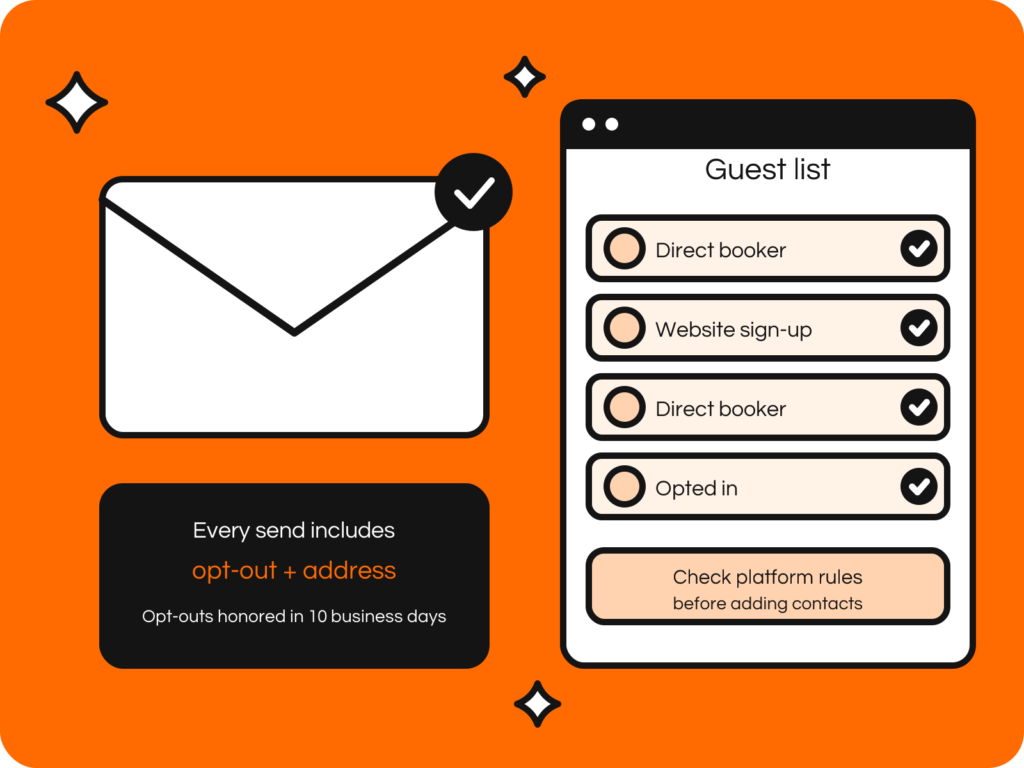
    • Airbnb’s policy. For reservations booked on or after November 20, 2026, Airbnb’s Help Center says hosts may not solicit personal data from guests, including contact details, at any point during the booking or stay, unless an exception applies. Build the list from direct bookers, website sign-ups, and other channels whose terms allow it. Check Airbnb’s policy before adding website links or sign-up prompts to any Airbnb guest materials.
    • U.S. email rules. The FTC’s guide to the CAN-SPAM Act says marketing emails need a clear way to opt out and a valid physical postal address, and opt-out requests must be honored within 10 business days. Check consent rules with your attorney before texting past guests.
Layer 5: Social Content

Layer 5: Social Content

  • What it does for direct traffic: Keeps your properties in front of people who’ve stayed, or might, and sends them to your website.
  • Ready when: You can post consistently. A burst of posts followed by silence does little.
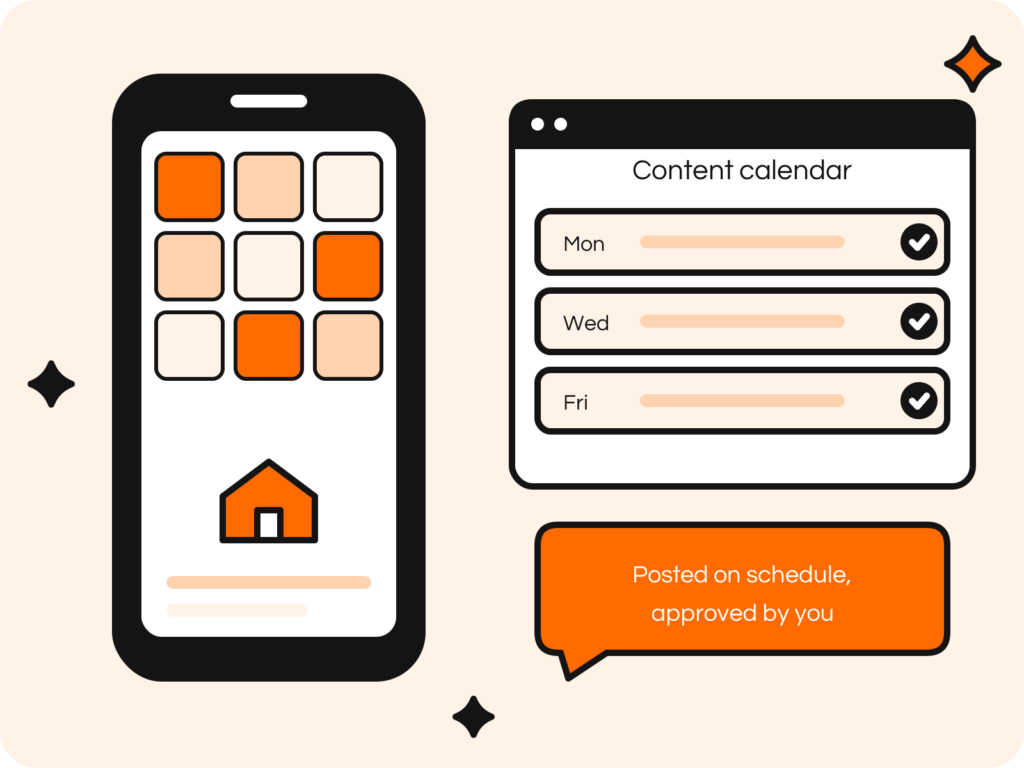
  • Who usually runs it: A marketing assistant can turn your photos and guest moments into a monthly calendar, write captions, schedule posts, and reply to routine comments. You approve the calendar. Here’s an eight-step social media plan for STRs.
  • What to keep: Your brand voice and anything that speaks for you publicly.

Layer 6: Paid Ads

  • What it does for direct traffic: Brings back website visitors who didn’t book, and reaches new guests in your markets.
  • Ready when: Your website already turns visitors into bookings. Ads sent to a site that doesn’t convert spend money twice: once on the click, and again on the guest who books an OTA instead.
  • Who usually runs it: You or a specialist set the budget and targeting. A marketing assistant can build campaigns from your brief, check spend daily, pause what’s clearly broken, and send a weekly report.
  • What to keep: Budget, goals, and the rules for what the assistant can pause without asking.

Which Support Fits Each Layer

Layer
Marketing assistant
Specialist or agency
Software or platform
You
OTA listings
Weekly updates, photos, amenities, review replies
Professional photography
Channel manager
Approve copy and pricing
Direct booking website
Updates, seasonal pages, content
Initial build and design
Booking engine
Policies and terms
Local visibility
Business Profile upkeep, local guides
SEO strategy, if needed
Local recommendations
Past-guest email
Sends, segments, list cleanup
Email platform
Offers and message
Social content
Calendar, captions, scheduling, comments
Scheduling tool
Brand voice approva
Paid ads
Campaign builds, daily checks, weekly reports
Strategy for larger budgets
Ad platforms
Budget and goals

The pattern is consistent. Specialists and software handle the setup, and the weekly execution is what decides whether the setup pays off. That’s the part a dedicated marketing assistant covers. For more on the role, see what dedicated marketing assistants do, and what they cost. For a broader view of marketing support for property managers, see outsourced marketing for property managers.

Measuring Whether It’s Working

Keep it simple. Track two numbers monthly:

  • Direct booking share: direct bookings as a share of all bookings, by property
  • Repeat guests: how many guests booked again, and through which channel

If direct share isn’t moving after a few months of steady execution, check the layers in order. Is the listing current? Does the website let guests book on the spot? Is the email list growing from channels that allow it? The weak layer is usually the one nobody owns.

Quieter months are a good time to build the slower layers, like local guides and website content. These slow season projects fit that window.

Frequently Asked Questions

Which marketing support service helps STR founders increase direct booking traffic?

Several types of support work together: someone keeping OTA listings current, a direct booking website, a Google Business Profile and local content, a past-guest email list, social content, and eventually paid ads. Most of it is weekly execution, which a dedicated marketing assistant can run. Delegate places marketing assistants trained across content and design, scheduling, paid ads, and SEO tools, starting at $13 an hour, month to month.

In what order should an STR founder add marketing support?

Start with your OTA listings, then a direct booking website, then local visibility, then a past-guest email list, then social content. Add paid ads last, once the website converts visitors into bookings.

Can I collect Airbnb guests’ emails for direct booking marketing?

For reservations booked on or after November 20, 2026, Airbnb’s Help Center says hosts may not solicit personal data from guests, including contact details, unless an exception applies. Build your list from direct bookers, website sign-ups, and channels whose terms allow it, and check Airbnb’s policy before adding links or sign-up prompts to Airbnb guest materials.

Is a Google Business Profile free for vacation rentals?

Google says creating a Business Profile and listing your business on Google is free. A marketing assistant can set it up and keep it current.

What rules apply to marketing emails to past guests?

According to the FTC’s CAN-SPAM guide, marketing emails need a clear opt-out and a valid physical postal address, and opt-outs must be honored within 10 business days.

Should I hire a marketing agency or a marketing assistant for my STR?

Agencies and specialists fit setup work, like building a website or planning a larger ad strategy. Dedicated marketing assistants fit the weekly execution: listing updates, content, email sends, social posts, and ad monitoring. Many founders use both. For agency-style options, see seven virtual marketing services for property managers.

For more, see how Delegate’s assistants use AI tools and the best virtual assistant services for U.S. rental hosts.

Give Past Guests a Reason to Book Direct

Direct bookings grow when every layer gets attention every week: a current listing, a website that books, local content, a clean email list, steady social posts. Most founders know what to do. The work just needs someone who owns it.

The 30-property team at Epic Property Pros saw what consistent guest and listing work can do: higher ratings, more bookings, page-one placement, and return bookers. Read how that team moved its listings onto Airbnb’s first page.

Delegate places dedicated marketing assistants for that weekly work and has served 140+ businesses. You choose from up to 5 candidates within 3 to 5 days, each one tested through paid work simulations, and only the top 1% of applicants make it through. An SOP consultation sets up your approval process before the first week. It’s month to month, starting at $13 an hour, with free replacement while you’re a client.

Which layer is missing from your marketing right now? Bring the answer to a discovery call, and you’ll see what a marketing assistant would take on first.